Why Air Conditioners Fail in Montgomery County in August
The heat doesn't break your AC in a single afternoon. It finishes off a problem that's been building for weeks.
August 25, 2026 · 4 min read
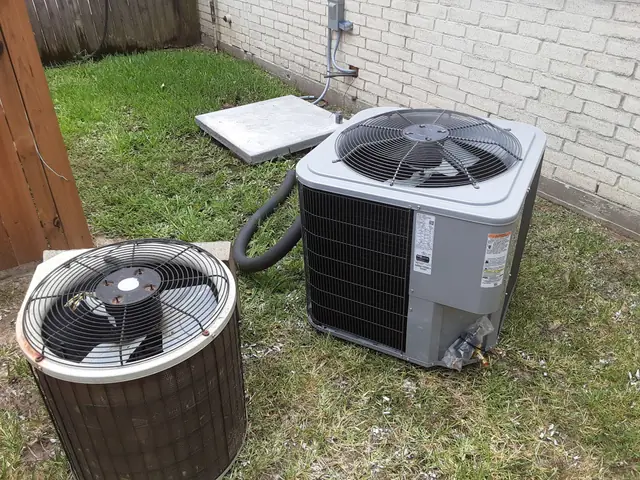
A compressor that ran fine in April doesn't quit because it got four months older. It quits because the load on it changed. August in Montgomery County means high afternoon temperatures, humidity that doesn't let go until well after dark, and attics that can sit well above 130 degrees by mid-afternoon. JTech Mechanical works these calls all summer out of the shop on FM 149 in Magnolia, covering Conroe, The Woodlands, Tomball, Spring, Willis and the rest of the north Houston side. The failures that show up this time of year aren't random. They cluster around a short list of causes, and most of them were building quietly before the day the system finally stopped keeping up.
The compressor was already working harder than it looked
An outdoor condensing unit rejects heat into the air around it. When that air is 98 degrees instead of 78, the compressor has to work against a much bigger temperature difference just to do the same job. Discharge pressure climbs, the motor windings run hotter, and any weak part gets found. The most common one is the run capacitor, a small cylindrical part that gives the compressor and fan motor the extra push they need to start and keep spinning smoothly. Capacitors degrade with heat and with hours run, and Texas summers put more hours on a system in twelve weeks than a lot of climates see in a year. A weak capacitor shows up as a system that hums but won't start, or one that starts and then trips off on its own protection a few minutes later.
A pitted or worn contactor causes something similar. That's the relay that actually closes the circuit to the compressor when the thermostat calls for cooling. Arc across it a few thousand times over several summers and the contact points wear down, sometimes to the point where the unit hums without engaging, or engages and then chatters. Neither part is expensive on its own. Both are the kind of thing that fails on the hottest day of the year because that's the day the system finally asked more of them than they had left to give.
A dirty outdoor coil turns a healthy system into a struggling one
The condenser coil is where the refrigerant gives up the heat it collected inside your house. Cottonwood fluff, mowed grass, oak pollen and plain dust settle into the fins over a season and choke that airflow down. The refrigerant can't shed heat properly, head pressure climbs, and the compressor starts pulling more amperage to do the same work. Run that condition long enough on a 100-degree day and the compressor's internal overload will trip it off to protect the motor, which reads to a homeowner as the unit just stopping mid-afternoon. A coil that's rinsed clean once or twice a year, before the load season and again mid-summer, doesn't have this problem build up in the first place.
Refrigerant charge and airflow you can't see from the yard
A system that's a pound low on refrigerant will often still run, just poorly. Low charge drops suction pressure, which can let the evaporator coil inside the air handler get cold enough to ice over. Once that happens airflow drops further, the coil gets colder still, and the whole thing spirals until the only air coming out of the vents is barely cool, or the line set outside is sweating and frosting where it shouldn't. On the newer side of the fence, the industry has been shifting from R-410A refrigerant to lower global-warming-potential blends like R-454B, and a technician working on either type needs to know which one is in a given system before touching the charge.
Airflow problems hide just as well. Ductwork that's undersized, crushed in an attic, or has too many tight turns creates resistance that shows up as static pressure, measured in inches of water column. A system fighting high static pressure moves less air across the coil than it was designed to, which means less cooling reaches the rooms even though the equipment itself is running exactly as it should. A correctly sized, well-installed system can still underperform for years if the duct run feeding it was never right to begin with.
- Short cycling (the system turns on and off in quick bursts instead of running a full cooling cycle)
- Ice visible on the outdoor line set or the indoor coil
- Air that's blowing but not actually cold after the system has been running a while
- A breaker that trips repeatedly on the hottest part of the day
JTech handles AC repair and new AC installation across Magnolia and the surrounding towns, and if a system goes down outside office hours they take emergency calls nights and weekends. Twice-yearly maintenance catches most of the causes above, capacitor wear, coil buildup, low charge, before they turn into a no-cool call in the middle of a heat wave.
JTech Mechanical, (281) 252-0360
Call (281) 252-0360More articles
What Twice-a-Year AC Maintenance Actually Involves
Two visits a year, timed right, catch most of what turns into an August breakdown.
Attic Air Handlers: The Ceiling Stain That Starts With a Drain Pan
The unit doing the real work in most Magnolia-area homes is hidden in the attic, and it's built around one small problem: water.